Get to know... Ana Luzio
Learn about the work of our Integrated Members.
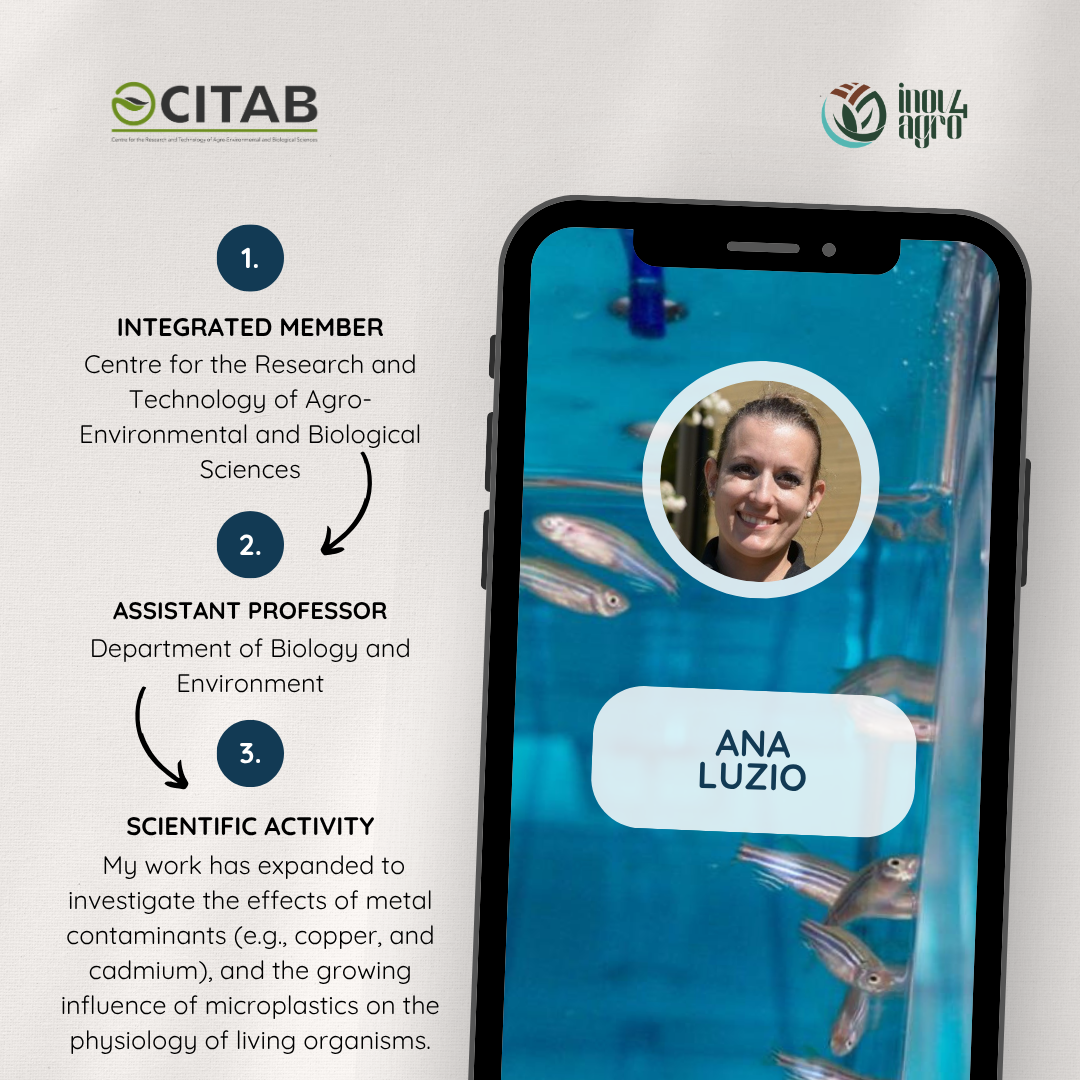
My research focuses on the zebrafish (Danio rerio), a widely used model organism for evaluating the impacts of pollutants, particularly endocrine‑disrupting chemicals (EDCs). During my PhD, I’ve assessed the histology of gonads to provide essential insights into reproductive health, allowing the detection of alterations such as disrupted gametogenesis, intersex conditions, and changes in tissue organisation that reflect endocrine imbalance. These biomarkers are crucial for assessing sublethal effects that may not be evident through traditional toxicity tests.


My work has expanded to investigate the effects of metal contaminants (e.g., copper, and cadmium), and the growing influence of microplastics on the physiology of living organisms. Through detailed gill histopathology, I examine structural and functional traits, which serve as early indicators of respiratory stress and contaminant uptake. These endpoints are particularly valuable for understanding how metals and microplastics interact with biological surfaces and compromise essential physiological processes.
The evaluation of combined exposures rather than isolated compounds is of upmost interest because organisms are rarely exposed to single pollutants. In this sense, I’ve focused on mix toxicity, exploring how EDCs, metals, and microplastics interact to produce additive, synergistic, or antagonistic effects. This approach provides a more accurate representation of real‑world exposure scenarios.
Overall, my work uses zebrafish as a powerful vertebrate model to investigate how complex contaminant mixtures affect biological systems, generating insights that extend beyond environmental toxicology and contribute to a broader understanding of potential risks to human health.